

Pakistan at a Crossroads
Today,
Pakistan faces a crossroads. While many observers perceive the gravity of its crises, they really have diverging views on the root causes and the solutions.
Most agree on the existence of deep political instability, economic fragility, and serious security threats, which intersect and reinforce each other and demand bold reforms. Yet beyond this consensus, analysts disagree on what drives the deterioration — and on the best path forward.
Shared Concerns: What Almost Everyone Agrees On
Political Instability and Democratic Erosion
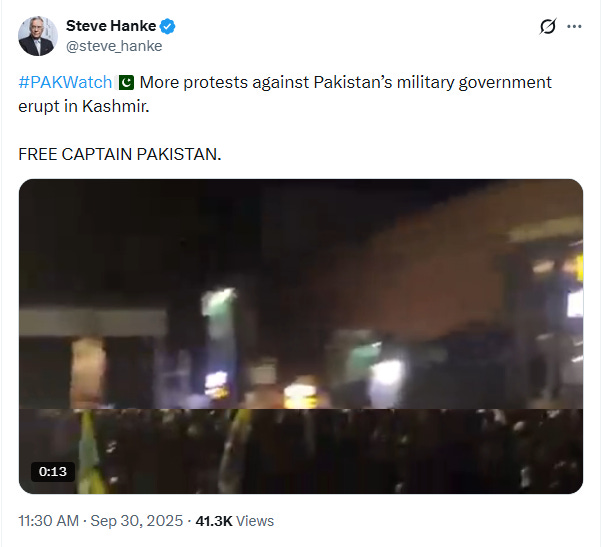
Frequent changes of government continue to undermine governance. As noted recently by DAWN, moves such as internet throttling, suppression of dissent and rapid constitutional changes have accelerated a slide toward authoritarianism.
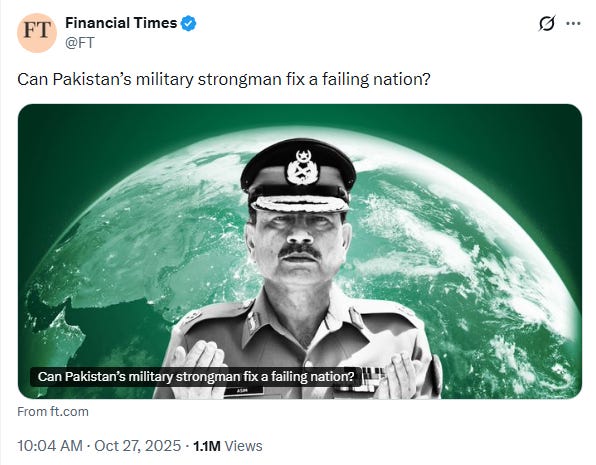
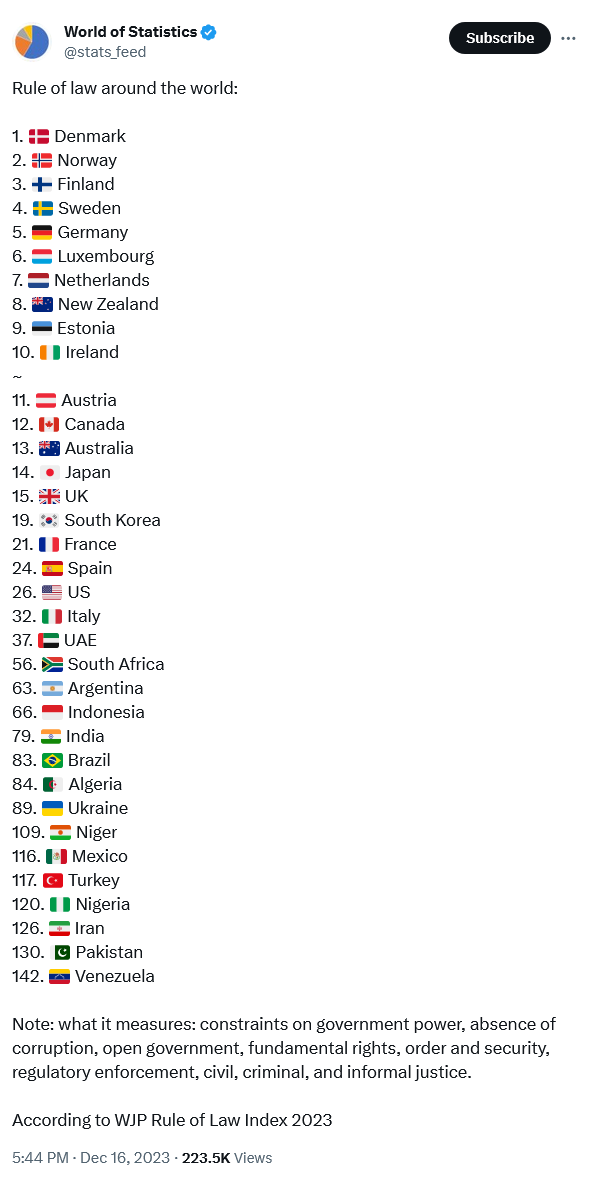
Many institutions lack the resilience or capacity to uphold rule of law. As a result, civilian governments find themselves unable to deliver consistent policy, while political polarisation and distrust between parties and state organs deepen. This uncertainty discourages long-term planning, hurting development.
Economic Fragility: Debt, Inflation, Low Investment
On the economic front, public debt has arisen to PKR 80.6 trillion (around $286 billion) by around mid-2025, at which is juncture the debt-to-GDP ratio will raise to roughly 70 percent. While most of such internally raised resource burden is internal, external liabilities continue to be significant.
At the same time, while the government recorded a modest primary surplus recently, debt servicing absorbs a large portion of revenue and squeezing out funds needed for infrastructure, health, education and social services.
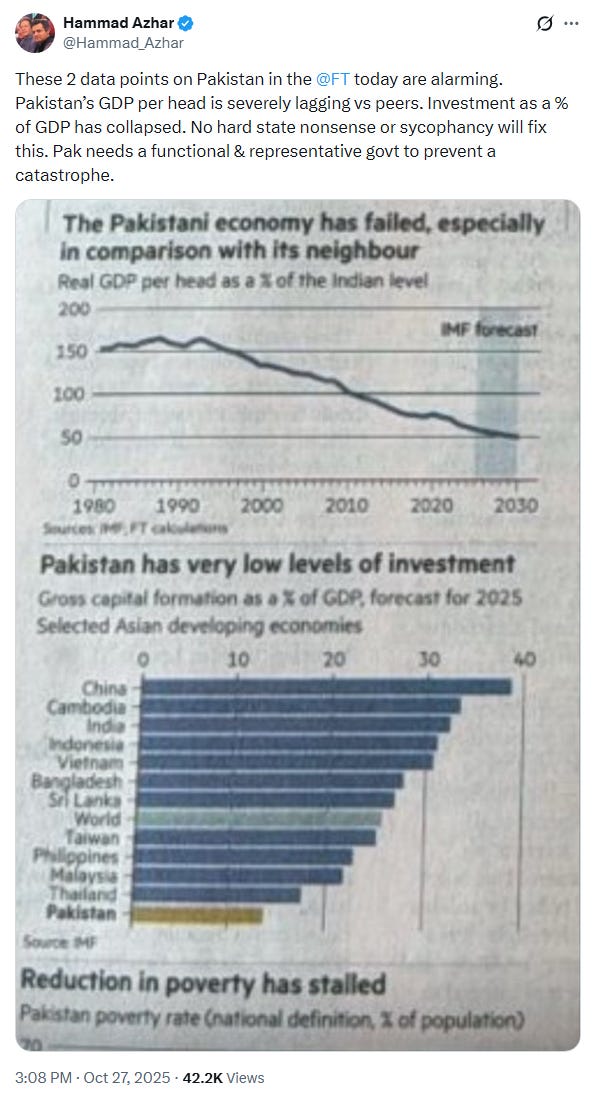
In such a case, investor confidence remains low while foreign investment flows stagnate and faces inflation, unemployment, and diminishment of public services. These economic pressures, according to several analyses, risk dragging the country into such a “doom loop” where economic decline undermines governance, which further thickens the “doom loop”.
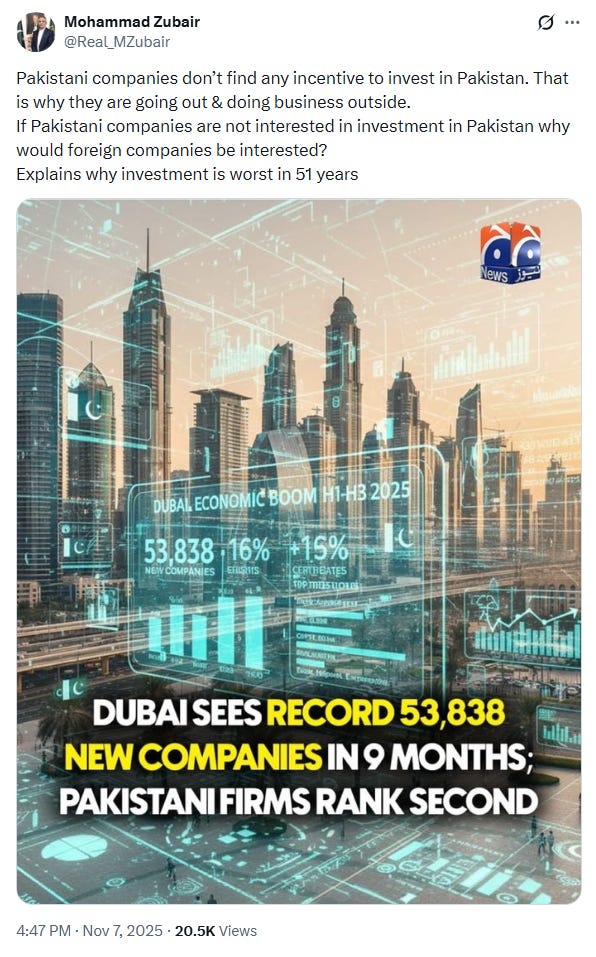
Security Threats: Terrorism, Insurgency and Regional Tensions
Security is another shared worry. According to a 2025 report, Pakistan ranked among the countries most impacted by terrorism — deaths from terror-related violence rose sharply compared with the previous year.
Insurgency attacks, such as in provinces like Balochistan or Khyber Pakhtunkhwa, offensive attacks carried out purposely to cities such as Karachi and Lahore, as well as ongoing militant activity have materially damaged trade, deterred direct investment from abroad, and reallocated state resources for the defence and security.

Cross-border-related tensions also follow, including with Afghanistan, as well as geopolitical pressure from regional powers thus adding external pressure to internal instability.
Consensus on Reform: Governance, Economy, Social Inclusion
Structural reform is considered of almost all the analysts as an indispensable requirement. Many have recommended strengthening governance institutions; enhancing transparency and restoring democratic norms.
Social reforms such as education, health, and social protection also seen as prominent to alleviate the risks arising from growing social unrest and enhance inclusion. Without these changes, the country headed for a lengthier decline. However, everything can still turned around if properly administered.
Diverging Diagnoses: Where Analysts Disagree
Even as they agree on the broad trends, analysts differ significantly on root causes and thus on solutions.
The Role of the Military vs. Civilian Politics
A strong strand of commentary highlights the growing influence of the military over both politics and economy. Critics argue that the military’s expanding role at often opaque and without accountability — undermines democratic institutions, distorts power balances, and deters meaningful civilian-led reform. Some see this as a core obstacle to long-term stability and economic revival.
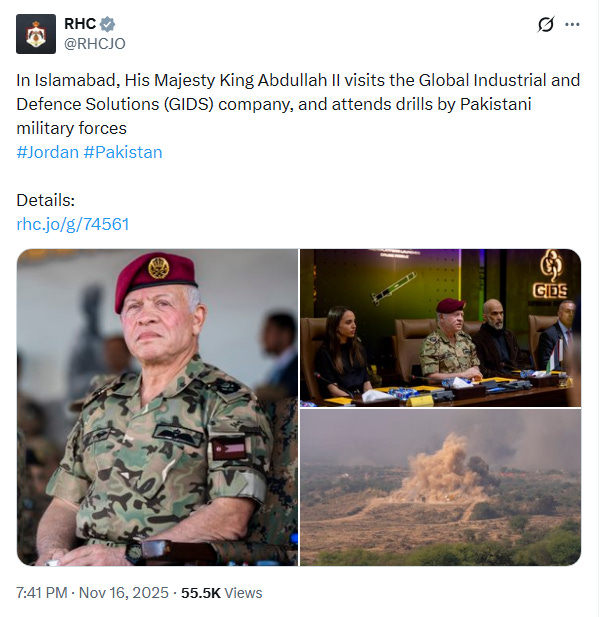
الديوان الملكي الهاشمي - The Royal Hashemite Court
For some, the end goal of this is a major obstacle to long-term stability and revitalizing the economy.
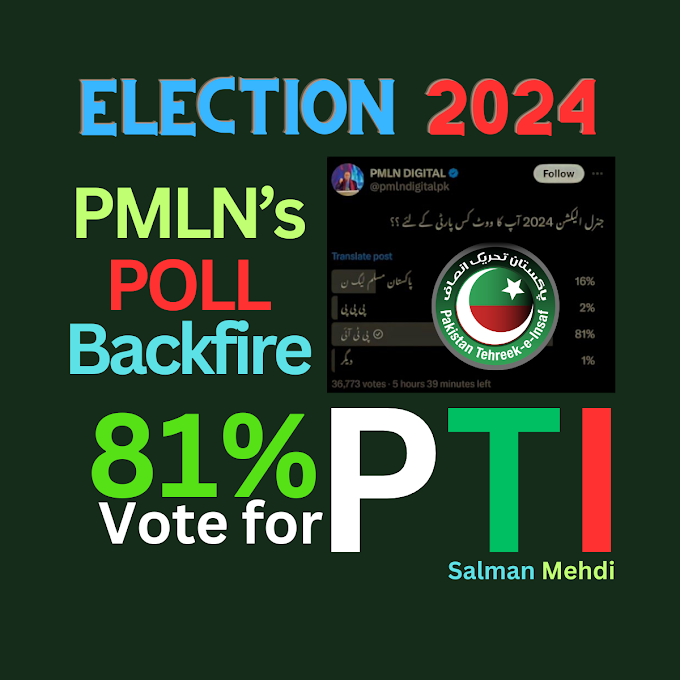
The public mobilizing, elections, and political unity preferred more highly than military presence in government affairs by others who generally belong to political parties or civil society organizations.
Thus, the path to genuine stability said to be through the end of polarizations, bolstering opposition politics, and reviving democratic contestation: These voices will lend this credence from renewed elections, coalition-building, and grassroots mobilization.
Foreign Policy Priorities: Regional Issues vs. Global Engagement
On foreign affairs: some analysts emphasise regional tensions; especially issues related to neighbouring Afghanistan, cross-border insurgencies, and unresolved territorial disputes. They argue Pakistan must prioritise stabilising its region before looking outward.
Meanwhile, others have given emphasis to balancing the relationships that Pakistan creates with global powers and international institutions, saying that it should therefore seek foreign investment, terms with international frameworks of trade, and diversify international ties.
The proponents of this view further deduced that isolating Pakistan in the geopolitical space would worsen its economic predicament.
Technology and Media: Censorship Risk vs. Digital Opportunity
Some of the analysts are seeing government control over internet, social media platforms, and digital media as necessary to preserve security and curb misinformation. These analysts warn that a free internet is in a deeply polarised society and may fuel unrest or empower militant propaganda.

The attitudes will contrast with those who believe such controls do worse than that by arguing that those public digital platforms could provide vital space for engagement in civil mobilization, education, transparency, and economic opportunity, largely through freelancing, tech startups, and remote work as a final end. Most of these voices seek restoration of freedoms on the internet and robust digital engagement to promote democratic life and economic growth.
A Complex Picture: Problems Intertwined
The core problem remains that political, economic, social and security crises intertwine into one another. High debt and economic distress cause desperation among citizens. Weakness of democratic institutions hampers accountability and effective decision-making. Security threats will inhibit investments and lead to diversion of lucrative public resources. Control of the media and censorship closes civic space and hampers social mobilization.
In addition, structural inequalities: regional disparities, lack of education, weak social services, exclusion of women, and minorities, amplify unrest in the society. As stated by one analysis done in the year 2025, almost one hundred million people live below the poverty line while tens of millions remain illiterate.
In such a restless environment, simple answers have seldom worked. Progress will require precise, honest, and accurate diagnosis and political will.
What Needs to Be Done: A Path Toward Renewal
Given the twisted crises, here are paths many experts have underscored. Which one should carry priority depends on how Pakistan juggles internal and external pressures.
Restore and strengthen democratic institutions. This means transparent elections, strong independent judiciary, accountable governance, and legal guarantees for civil rights. Without institutional trust, chances are any reform would be reversed or undermined.
The fiscal imbalance should be corrected through structural economic reforms. Curbing wasteful borrowing might help, restructuring state enterprises, enhancing tax collection, and making investment in growth-inducing sectors (agriculture, industry, tech) imperative. Debt servicing should not crowd out essential services to the public.
Long-term stability must be secured through social investment. Education, health, and social protection services must be enhanced. These for the marginalised communities can mitigate unrest, develop human capital, and promote inclusion.
Do not stifle the digital economy and technology. Given the potential for freelancing and remote work in digital services, Pakistan needs to support its technology sector by restoring internet freedom, promoting digital literacy, and financing startups.
Pursue balanced foreign policy along with regional diplomacy. While security concerns cannot be neglected, building economic ties with trade and investment partners may relieve the economic pressure and decrease dependency on loans.
Engage in national dialogue rather than zero-sum politics. People from different political, ethnic, and provincial backgrounds should forge a consensus around common goals. Political unity and public trust will help lessen crises during times of leadership change.
My View
A crisis in Pakistan does not emanate from one single failure. It comes from the collapse of political maturity, economic discipline, and social responsibility. No engineered arrangement or periodic elections can do the repair alone.
What the country needs is a long vision backed by real reforms supported by fair governance, transparent institutions, sustainable economic policies, social justice, and an empowered citizenry. The recovery of the nation depends on injecting the social muscles of its people into clear rules and institutions strong enough to rise beyond individual leaders or parties. This would require patience, honesty, and courage to face the unpalatable truths.
As for now, the warning signs are clear. The alternative to reform means deeper instability. Pakistan has yet to overcome its chronic limitation of red tapes. Elections are still shadowed by bureaucratic limitations, and the judiciary’s track record shows a long tendency to walk with the entrenched power. Several key institutions - FWO, Army Welfare Trust, and dealings over DHA land - remain shielded from the protection of public scrutiny.
In deeper realms of politics, opacity prevails. From the Omni Group to Zardari as well as Nawaz Sharif’s wealth, the public still does not have a complete account of the assets shaping national power. While from the growing poverty level, the elite continue to profit, taxes drawn from ordinary people often go round in benefits for those already privileged.
There is no short end of this maze. It is a hard path of renewal that requires the collective will of all Pakistanis. Truths about stability and justice can only be achieved through common determination and structural reform.
At last, there stands no shortcut. The road ahead is arduous and requires the collective will of all Pakistanis. This will be the only place from where real renewal can start.
#PakistanCrisis #AsimMunir #MilitaryCoup #PakistanFailedState #ImranKhan #EndMilitaryRule #PakistanDebtTrap #BoycottEstablishment #ImportGenerals #CivilWarLoading






 Posts
Posts