
Pakistan at a Crossroads
Today,
Pakistan faces a crossroads. While many observers perceive the gravity of its crises, they really have diverging views on the root causes and the solutions.
Most agree on the existence of deep political instability, economic fragility, and serious security threats, which intersect and reinforce each other and demand bold reforms. Yet beyond this consensus, analysts disagree on what drives the deterioration — and on the best path forward.
Shared Concerns: What Almost Everyone Agrees On
Political Instability and Democratic Erosion
Frequent changes of government continue to undermine governance. Moves such as internet throttling, suppression of dissent and rapid constitutional changes have accelerated a slide toward authoritarianism.
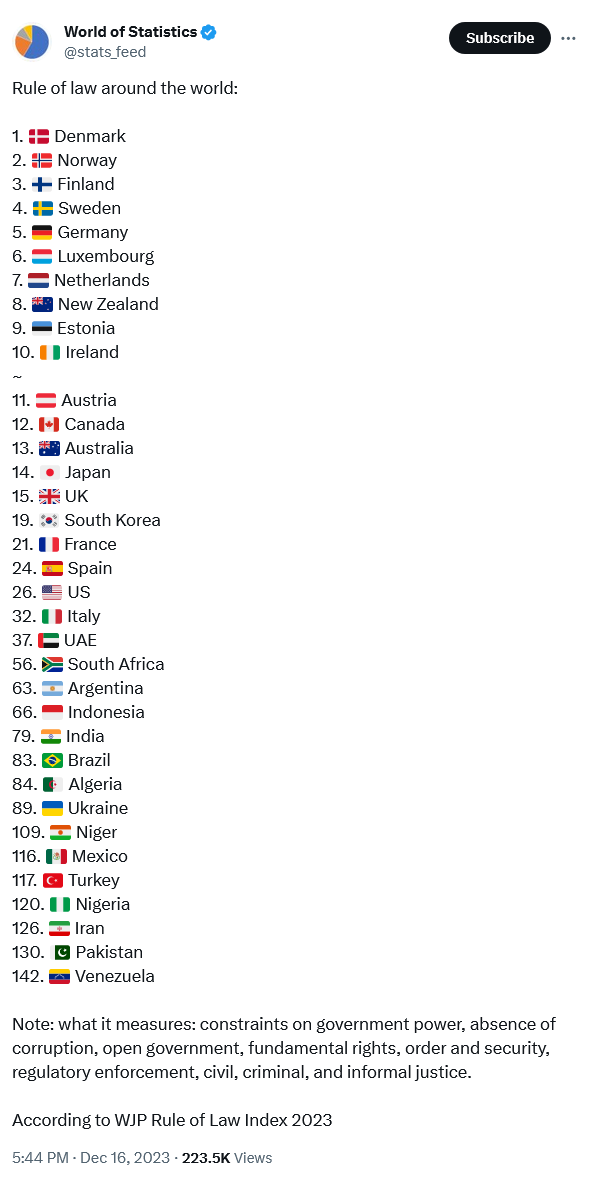
Many institutions lack the resilience or capacity to uphold rule of law. As a result, civilian governments find themselves unable to deliver consistent policy, while political polarisation and distrust between parties and state organs deepen. This uncertainty discourages long-term planning, hurting development.
Economic Fragility: Debt, Inflation, Low Investment
On the economic front, public debt has risen to PKR 80.6 trillion (around $286 billion) by mid-2025, pushing the debt-to-GDP ratio to roughly 70 percent. While most of the burden is internal, external liabilities remain significant.
Debt servicing absorbs a large portion of revenue, squeezing out funds needed for infrastructure, health, education and social services.
Investor confidence remains low, foreign investment flows stagnate, and the country faces inflation, unemployment, and diminishment of public services. These economic pressures risk dragging the country into a “doom loop” where economic decline undermines governance, which further accelerates the loop.
Security Threats: Terrorism, Insurgency and Regional Tensions
According to 2025 reports, Pakistan ranked among the countries most impacted by terrorism — deaths from terror-related violence rose sharply compared with the previous year.
Insurgency attacks in Balochistan and Khyber Pakhtunkhwa, targeted strikes in cities such as Karachi and Lahore, and ongoing militant activity have damaged trade, deterred foreign investment, and diverted state resources to defence and security.
Cross-border tensions, especially with Afghanistan, and geopolitical pressure from regional powers add further external strain to internal instability.
Consensus on Reform: Governance, Economy, Social Inclusion
Almost all analysts consider structural reform indispensable. Strengthening governance institutions, enhancing transparency, and restoring democratic norms are seen as essential. Social reforms in education, health, and social protection are viewed as critical to reduce unrest and increase inclusion. Without these changes, the country is headed for prolonged decline — yet everything can still be turned around with resolute action.
Diverging Diagnoses: Where Analysts Disagree
The Role of the Military vs. Civilian Politics
A strong strand of commentary highlights the growing influence of the military over politics and the economy. Critics argue that the military’s expanding, often opaque and unaccountable role undermines democratic institutions, distorts power balances, and blocks meaningful civilian-led reform. Many see this as the core obstacle to long-term stability and economic revival.
Foreign Policy Priorities: Regional Issues vs. Global Engagement
Some analysts emphasise regional tensions — Afghanistan, cross-border insurgencies, unresolved disputes — and argue Pakistan must stabilise its neighbourhood first. Others prioritise balancing relations with global powers and international institutions, attracting foreign investment, and diversifying ties to avoid isolation and worsen the economic crisis.
Technology and Media: Censorship Risk vs. Digital Opportunity
Some view government control over internet and social media as necessary for security and to curb misinformation in a polarised society. Others argue such controls stifle civic space, education, transparency, and economic opportunity (freelancing, tech startups, remote work) and call for restoration of internet freedom.
A Complex Picture: Problems Intertwined
Political, economic, security and social crises feed one another. High debt breeds desperation. Weak democratic institutions hamper accountability. Security threats deter investment and consume resources. Media control shrinks civic space.
Structural inequalities — regional disparities, lack of education, weak social services, exclusion of women and minorities — amplify unrest. In 2025, nearly one hundred million Pakistanis live below the poverty line and tens of millions remain illiterate.
In this environment, simple answers rarely work. Progress requires accurate diagnosis and genuine political will.
What Needs to Be Done: A Path Toward Renewal
- Restore and strengthen democratic institutions — transparent elections, independent judiciary, accountable governance, legal guarantees for civil liberties.
- Fix fiscal imbalance through structural economic reforms — curb wasteful borrowing, restructure state enterprises, improve tax collection, invest in growth sectors.
- Secure long-term stability through massive social investment in education, health, and social protection, especially for marginalised communities.
- Stop stifling the digital economy — restore internet freedom, promote digital literacy, fund startups.
- Pursue balanced foreign policy and proactive regional diplomacy while maintaining security.
- Replace zero-sum politics with genuine national dialogue across political, ethnic and provincial lines.
My View
Pakistan’s crisis does not stem from a single failure. It is the cumulative result of collapsed political maturity, economic discipline, and social responsibility. No engineered arrangement or staged election can fix it alone.
What the country needs is a long-term vision backed by real reforms, fair governance, transparent institutions, sustainable economic policies, social justice, and an empowered citizenry. Recovery depends on strong institutions that outlast individual leaders or parties. This demands patience, honesty, and the courage to confront uncomfortable truths.
The warning signs are unmistakable. The alternative to reform is deeper instability. Pakistan has not yet overcome its chronic opacity. Elections remain manipulated, the judiciary often aligns with entrenched power, and key military-commercial empires (FWO, Army Welfare Trust, DHA etc.) remain shielded from scrutiny. Elite wealth — from the Omni Group to the Sharifs and Zardaris — still lacks full public accounting while ordinary citizens bear the tax burden that largely benefits the privileged.
There is no shortcut out of this maze. Renewal requires the collective will of all Pakistanis. True stability and justice can only emerge from shared determination and structural reform.
There are no shortcuts. The road ahead is arduous and demands the united resolve of every Pakistani. That is where genuine renewal must begin.






 Posts
Posts